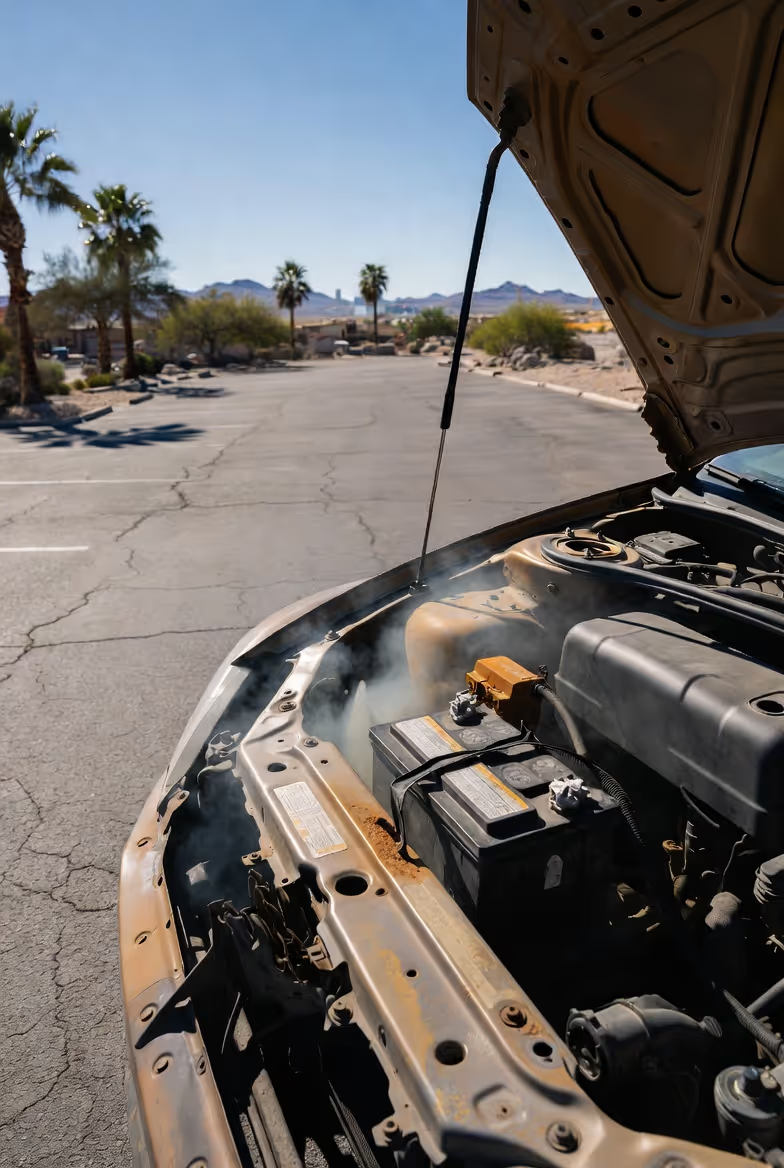
It is the middle of summer in Las Vegas, the sun has been on your car all day, and suddenly the battery is done. Most people think cold weather is the main battery killer, but here the heat is the real problem.
In Southern Nevada, car batteries often last two to three years instead of the four to five years people expect in cooler places. The heat under the hood speeds up wear and tear until one day the car will not start at all.
Short version
Heat is slowly cooking your battery from the inside. It does not usually fail out of nowhere. The signs show up first, then one hot day it finally gives up.
Cold mornings get the blame because that is when a weak battery finally refuses to start. But the damage usually happens in the hot months when temperatures are at their highest.
On a triple digit day, the air might read one number but the temperature under the hood can be much higher. That extra heat speeds up the chemical reactions inside the battery and breaks it down over time.
Heat speeds up chemistry
Higher temperatures make the chemical reactions inside the battery happen faster. That can help in the short term but it uses up the battery’s life more quickly.
Fluid loss and dry plates
Heat can cause the fluid inside the battery to evaporate. As the level drops, parts of the internal plates can be exposed and start to degrade.
More corrosion
Hot, dry conditions speed up corrosion on terminals and internal parts. That extra resistance makes it harder for power to move where it needs to go.
Las Vegas is a heat island. Concrete, asphalt, and parking lots soak up the sun all day and then radiate it back onto parked cars. Under the hood it stays hot long after the sun goes down.
Short trips around town can make things worse. If you drive a few miles at a time with the air conditioning on, the alternator may not have enough time to fully recharge the battery between starts.
Typical lifespan here
In this climate, many batteries are ready for replacement somewhere around the two to three year mark, even if they look fine from the outside.
Most batteries do not fail with no warning at all. The car usually tells you something is off before it strands you.
Slow cranking on hot days
The engine turns over more slowly than normal when the weather is hot, even though it used to spin up quickly.
Swollen battery case
The battery case looks puffed out or distorted. That can be a sign of internal heat and pressure and it is not safe to ignore.
Frequent jump starts
You need a jump more often, even when you have not left lights on or added new accessories. The battery may not be holding a charge.
Corrosion and sulfur smell
There is white or green buildup on the terminals or a faint rotten egg smell when you open the hood. Both are signs to get the system checked.
You cannot change the weather but you can stack the odds in your favor. A few simple habits go a long way in the desert.
A jump start can be the right move or just a short term patch. The trick is knowing which situation you are in before you spend time and money on the wrong thing.
Good jump start candidates
Battery is on the newer side, you left lights on, and everything worked fine the day before. A single jump may get you back on the road.
Time for replacement
Battery is around three years old or more in this climate and now needs help more than once. At that point a new battery is usually the smarter choice.
Red flag situations
Swollen case, leaking fluid, strong smell, or heavy corrosion are all signs to skip the jump and have the system checked or the battery replaced.
Not sure which one you need?
You do not have to guess. Tell us what you hear, see, and smell when you turn the key and we will walk through it with you.
If a simple jump makes sense, we will say that. If the battery is at the end of its life, we will tell you that too so you can plan the next step.
If you are at home, in a driveway, or in a parking lot, you usually have time to think and plan. If you are stuck in a busy lane or on a ramp with no real shoulder, safety comes first.
Once you are in a safe spot, reach out. We can help you figure out if you only need a jump, if it is time for a new battery, or if a tow to a shop is the better move.
Battery acting up in the heat?
(702) 758 4077
Tell us what is happening. We will give you clear options and help you decide what makes sense.
For details on what a jump start visit might cost, you can read our guide on jump start pricing. If you just want to see service rates, the pricing page is kept current.
The Haulnado team


.svg)