Most drivers assume roadside assistance works the same regardless of what they drive. Show up, fix the problem, done. The reality is that SUVs and sedans create meaningfully different situations for roadside technicians, tow operators, and anyone trying to resolve a breakdown quickly on the side of a Las Vegas road.
The differences show up in tire size and spare location, battery access and jump start positioning, towing equipment requirements, ground clearance, and the specific failure modes each vehicle type is more prone to in Las Vegas heat. This guide covers all of it so you know what to expect before the situation happens.
The practical difference: SUVs are heavier, sit higher, carry larger tires, and often require different equipment than sedans for towing and roadside work. Knowing this before a breakdown means fewer surprises and a faster resolution when it counts.
A flat tire is the most common roadside event for both vehicle types. The process looks similar from the outside but the physical reality of changing an SUV tire versus a sedan tire is significantly different.
SUV flat tire
Sedan flat tire
The undercarriage spare problem on SUVs: many SUV owners discover for the first time during a breakdown that the spare tire is suspended under the vehicle on a cable and requires a specific tool to lower it. If that tool is missing from the vehicle or the cable mechanism has seized due to rust or debris from Nevada roads, the spare cannot be accessed roadside without professional equipment. Check your SUV's spare access method before you need it.
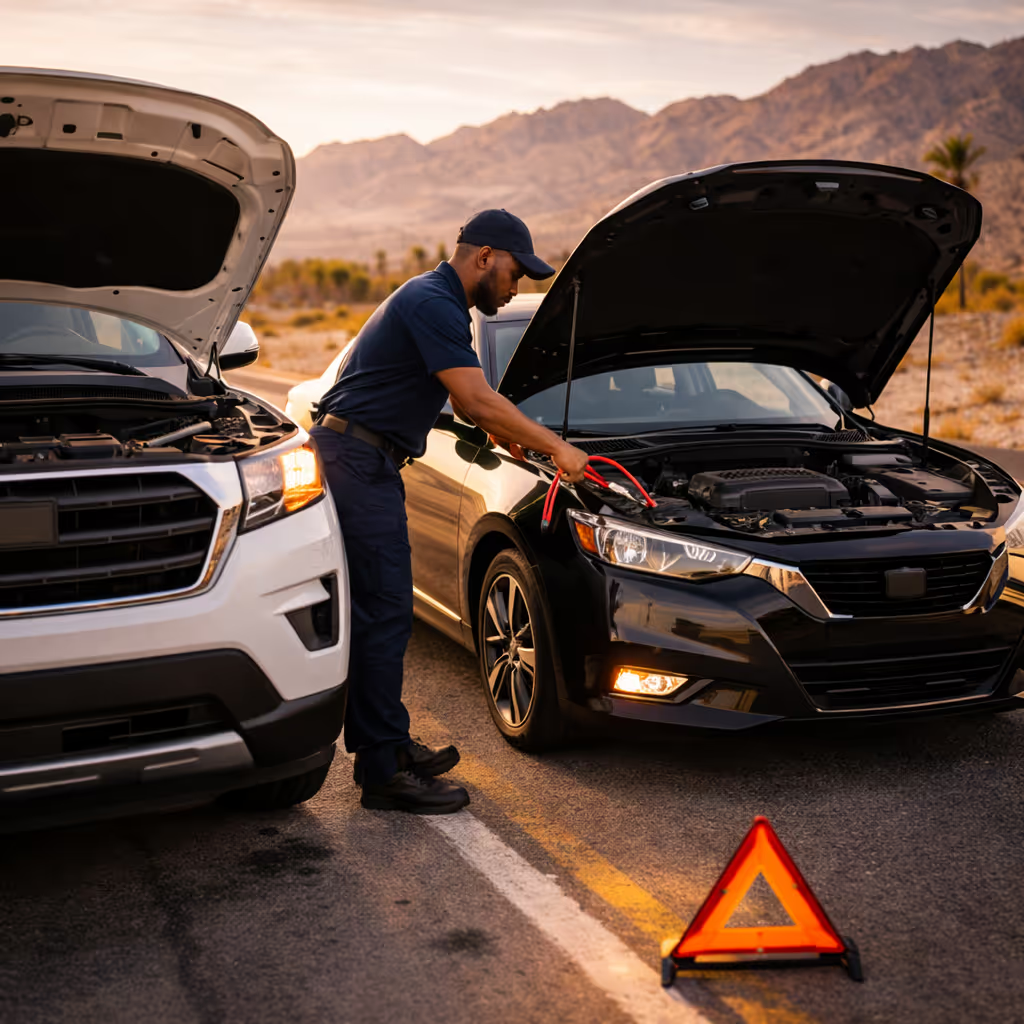
Jump starting an SUV and a sedan involves the same basic procedure but the physical differences between the two vehicles create different access and equipment considerations.
Battery location and access
Most sedan batteries are under the hood in an accessible location. SUV batteries can be under the hood, under the rear cargo floor, or in a side wheel well depending on the make and model. Some SUVs place the battery in a location that requires partial disassembly to access fully. Always confirm battery location in the owner's manual, particularly on newer full-size SUVs where placement varies significantly by manufacturer.
Cable reach and positioning
The height difference between an SUV and a sedan creates a positioning challenge when using a sedan to jump start an SUV or vice versa. Standard jumper cables may reach at an awkward angle depending on how the vehicles are parked. A portable jump pack eliminates this problem entirely and is a practical tool for any SUV owner to keep in the vehicle.
Battery size and amperage
Full-size SUVs typically carry higher-amperage batteries than sedans to support larger engines and heavier electrical loads. Some portable jump packs designed for sedan-sized batteries may not deliver sufficient cranking amps for a full-size SUV. Confirm that the jump pack or assisting vehicle has adequate capacity for the SUV engine size before attempting.
Hybrid and EV SUVs
The growing market share of hybrid and EV SUVs in Las Vegas adds a layer of complexity. Hybrid SUV jump starts follow the hybrid-specific procedure covered in the jump starting hybrid and EV guide. Do not attempt a conventional jump start on a hybrid SUV without reading the owner's manual first. The same rules apply regardless of whether the hybrid platform is in an SUV or a sedan body.
Towing an SUV and towing a sedan are different jobs that require different equipment configurations in several meaningful ways.
| Factor | SUV | Sedan |
|---|---|---|
| Vehicle weight | Full-size SUVs typically 4,500 to 6,000+ lbs | Most sedans range from 2,800 to 3,800 lbs |
| Tow truck type | Heavier trucks needed for full-size SUVs | Standard light-duty tow trucks sufficient for most sedans |
| Ground clearance | Higher clearance requires different wheel lift angle | Lower clearance allows standard wheel lift approach |
| AWD and 4WD | AWD and 4WD SUVs must be flat-bed towed to avoid drivetrain damage | Most sedans can be wheel-lifted on the drive axle |
| Width | Wider track width affects flatbed loading position and tie-down placement | Standard width, straightforward loading and tie-down |
| AAA tow plan coverage | Heavier SUVs may incur additional towing fees on some roadside plans due to weight | Standard towing fees apply within plan limits |
The AWD flat-bed rule every SUV owner should know:
Most modern SUVs with all-wheel drive or four-wheel drive systems must be transported on a flat-bed tow truck rather than wheel-lifted. Wheel-lifting an AWD SUV with only two wheels off the ground can cause the transfer case, differential, or transmission to spin without lubrication, leading to expensive drivetrain damage. When calling for a tow on an AWD SUV, always specify AWD and request a flat-bed. Confirm this with your roadside assistance provider before they dispatch a wheel-lift truck.
Las Vegas heat affects SUVs and sedans differently because they are used differently, weigh differently, and carry different systems under load.
More common in SUVs
More common in sedans
| Item | SUV priority | Sedan priority |
|---|---|---|
| Portable jump pack with high cranking amps | Essential. SUV engines need more cranking power than sedan-rated packs may deliver | Standard capacity pack sufficient for most sedan engines |
| Spare tire access tool | Critical for SUVs with undercarriage spare. Confirm it is in the vehicle now, not after a flat | Less critical, most sedan spares are trunk-accessible without special tools |
| Water supply | More people and longer wait times on a highway shoulder justify extra water supply | One to two liters minimum for Nevada highway driving |
| Tire inflator kit | Backup option for small punctures if spare access fails | Primary backup if the vehicle has no spare, especially run-flat equipped models |
| Tow strap rated for vehicle weight | Higher vehicle weight requires a heavier-rated tow strap than sedan spec | Standard rated tow strap sufficient for most sedans |
| Owner's manual accessible in the vehicle | Battery location, spare access, and AWD tow instructions all vary by SUV model | Battery location and spare access instructions vary between sedan models |
What to include when requesting roadside service for an SUV: vehicle make, model, year, and whether it is AWD or 4WD. This determines whether a flat-bed is required and whether jump start equipment needs higher cranking capacity. For flat tire requests, note whether the spare is undercarriage-mounted and whether the access tool is available in the vehicle. The more specific the vehicle details in the quote request, the faster the right equipment arrives.
Does it cost more to tow an SUV than a sedan?
It can, for two reasons. First, full-size SUVs with AWD or 4WD require flat-bed towing rather than wheel-lift, and flat-bed trucks are more expensive to dispatch. Second, some roadside assistance plans charge additional fees for vehicles above certain weight thresholds. Check your plan's terms for vehicle weight or vehicle type restrictions before assuming the standard rate applies to a full-size SUV.
Can I change an SUV tire myself on the side of the road?
Yes, with caveats. If you are in a safe off-road location, have the correct tools, can access the spare from the undercarriage carrier, and can lift and mount a full-size SUV tire, a DIY change is possible. On a highway shoulder in Las Vegas summer heat with a heavy full-size spare, calling for professional roadside service is the safer and more practical choice for most drivers.
Why can an AWD SUV not be wheel-lifted for towing?
On an AWD vehicle, all four wheels are mechanically connected through the transfer case and differential. When two wheels are lifted and spinning while the other two are stationary on the road, the drivetrain spins without oil circulation in the transfer case and differential. This causes metal-on-metal wear that can result in expensive drivetrain damage within a short towing distance. Always specify AWD when requesting a tow and confirm a flat-bed is dispatched.
My SUV has no spare tire. What are my options for a flat in Las Vegas?
Several options depending on the situation. If the puncture is small and the inflator kit included with the vehicle works, use it and get to a tire shop immediately. If the kit fails or the damage is too large for the kit, you need a tow to the nearest tire shop or a same-day delivery of a compatible spare or run-flat to your location. Send your vehicle make, model, and location for a quote on spare delivery.
Are sedan batteries easier to jump start than SUV batteries?
Generally yes. Sedan batteries are typically more accessible, smaller in physical size, and require less cranking amperage than full-size SUV batteries. A portable jump pack that handles a sedan may not deliver enough amps for a large SUV engine. If you carry a jump pack for an SUV, confirm it is rated for the engine size in your specific vehicle.
Does Haulnado roadside service cover both SUVs and sedans in Las Vegas?
Yes. Haulnado roadside service covers both SUVs and sedans for jump start, flat tire, fuel delivery, and battery service across Las Vegas, Henderson, and Boulder City. Include the vehicle make, model, year, and whether it is AWD or 4WD in the quote request so the right equipment and approach is confirmed before dispatch.
SUV or sedan. Broken down in Las Vegas. Need help now?
Roadside service with the right equipment for your vehicle.
Vehicle make, model, year, drivetrain type, and your location. Quote before dispatch. Las Vegas, Henderson, and Boulder City covered.
View Roadside Services Get a Quote NowFor jump start specifics on hybrid and EV vehicles, see the hybrid and EV jump start guide. For flat tire situations, see the flat tire guide. For AAA membership details, see the AAA Las Vegas guide. For pricing details, visit the pricing page.
The Haulnado team


.svg)