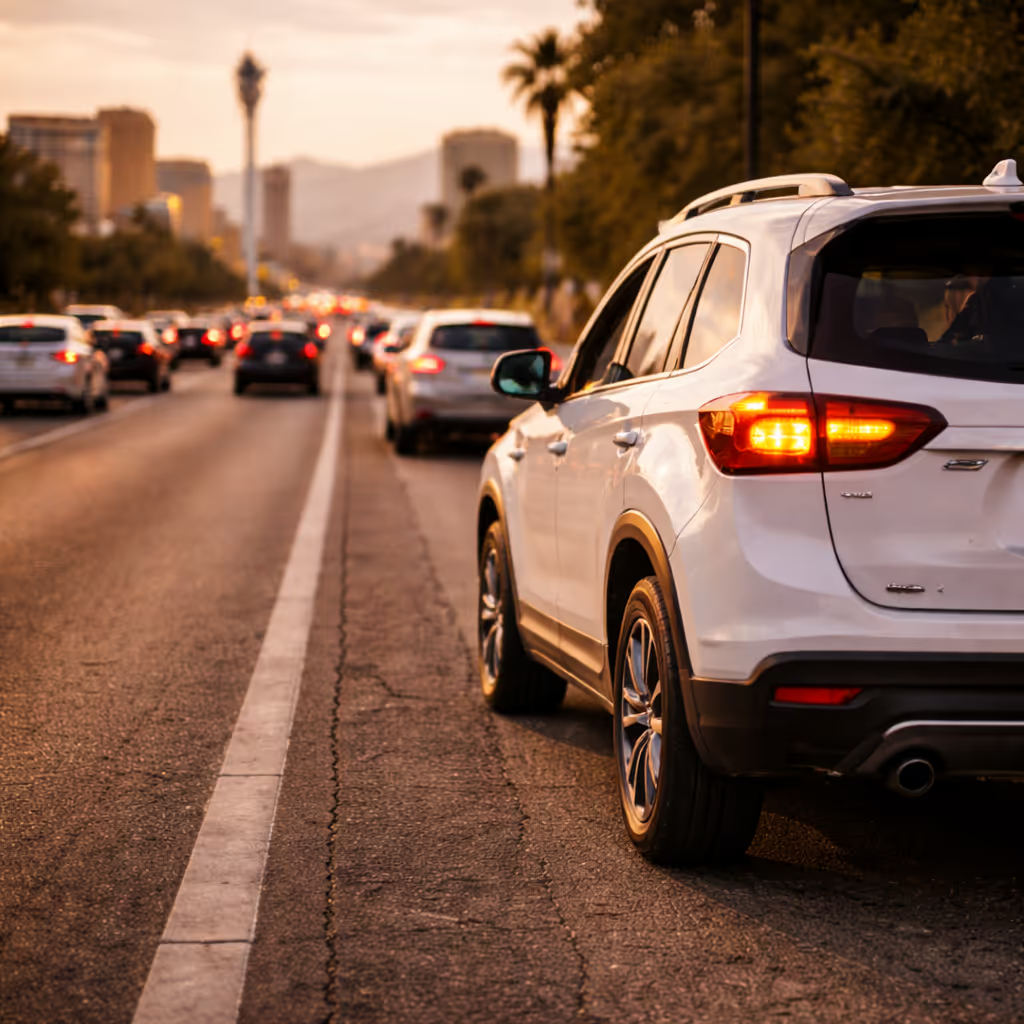
A breakdown on a busy Las Vegas road is not just an inconvenience. On Las Vegas Boulevard with pedestrian traffic flowing around your vehicle. On I-15 at rush hour with vehicles passing at highway speed three feet from your door. On US-95 in the dark with no shoulder lighting and fast-moving traffic. Each of these situations carries real physical danger if the first sixty seconds are handled wrong.
This guide covers the exact sequence to follow when your vehicle breaks down on a busy Las Vegas road, how each major road type in Las Vegas creates different risks, what to do once you are safely stopped, and who to call based on your situation.
The sequence that matters most: hazard lights on, steer right, get fully off the road, stay in the vehicle. These four actions in the first sixty seconds determine whether a breakdown becomes a dangerous secondary incident or a manageable roadside wait.
The immediate sequence for any Las Vegas road breakdown:
Every major road type in the Las Vegas valley creates a different set of risks when a breakdown occurs. What you do in the first moments needs to match where you are.
Las Vegas Boulevard (The Strip)
The Strip combines slow-moving vehicle traffic with extremely heavy pedestrian crossings, rideshare pickup zones, hotel driveways, tour buses, and cyclists, all in a dense corridor. A stopped vehicle in a Strip travel lane blocks multiple lanes and creates a collision risk from rear-end impacts as well as a risk to pedestrians navigating around the vehicle. The dense hotel and casino property line on both sides means a driveway or parking lot entrance is almost always within coasting distance. Target one immediately. Do not stop in a crosswalk or block a hotel driveway entrance fully. Las Vegas Metropolitan Police respond to Strip breakdowns quickly due to traffic impact.
I-15, US-95, and I-215 freeways
Las Vegas freeways carry high-speed traffic with limited stopping distance and reduced reaction time compared to surface streets. A shoulder breakdown on I-15 or US-95 places you and your vehicle within feet of vehicles traveling at 65 to 75 miles per hour. Nevada's Freeway Service Patrol operates on major Las Vegas freeways during peak hours and will stop to assist. Call 911 if the vehicle is in a dangerous position. Stay inside the vehicle with your seatbelt fastened. If you must exit the vehicle due to immediate danger, exit from the passenger side away from traffic and move completely behind the barrier or up an embankment away from the traffic lane.
Major surface streets: Flamingo, Tropicana, Sahara, Charleston, Sunset
Las Vegas major surface streets have multiple lanes, signalized intersections, and varying traffic speed. The risk here is blocking an intersection or a turn lane, which disrupts traffic flow significantly and creates a rear-end risk from drivers not expecting a stopped vehicle. If the vehicle dies in an intersection, immediately signal for help and attempt to push the vehicle to the nearest curb. If pushing is not possible, call 911 to request traffic control assistance. Surface street shoulders and turn lane zones are narrower than freeway shoulders in many locations.
US-93 between Henderson and Boulder City
This two-lane highway carries high-speed traffic with no median, limited cell coverage in some sections, no shade, and no services for long stretches. A breakdown here is immediately more serious in summer heat. Pull as far off the paved surface as possible. If you have any cell signal, call for help before you lose coverage. Do not walk along US-93 in summer heat. Stay in the vehicle with air conditioning running if any fuel remains. This is one of the Las Vegas area roads where running out of fuel and a mechanical breakdown can overlap into a heat emergency within a short period.
Parking structures and hotel parking lots
A breakdown in a casino or resort parking structure is one of the safest road-based breakdown locations in Las Vegas in terms of traffic risk. The vehicle is already off public roads. The risks shift to structural clearance for tow trucks, which may not fit in all parking structure levels, and to the heat inside a parking structure that is not shaded. Contact the property security or valet team, as many Strip properties have in-house or contracted roadside response. A tow from a parking structure may require a flatbed with low-clearance ramp capability depending on which level you are on.
Nevada Move Over law: Nevada law requires drivers approaching a stopped vehicle with flashing lights on a highway shoulder to move to a non-adjacent lane if it is safe to do so, or to reduce speed significantly if a lane change is not possible. This law applies to emergency vehicles, tow trucks, and any vehicle displaying flashing lights on a roadway shoulder. Drivers who fail to comply face significant fines and points on their license. While this law provides you legal protection as a stopped vehicle, it does not make a highway shoulder safe. High-speed traffic passing within feet of your vehicle remains dangerous regardless of legal requirements. Staying inside the vehicle with your seatbelt on is always the safer position.
Confirm your exact location
Pull up your GPS or maps app and note the exact address, cross street, mile marker, or GPS coordinates. This is the first thing any roadside service or emergency dispatch will ask for and having it ready saves critical minutes.
Keep hazard lights running
Hazard lights should remain on for the duration of the stop. If the battery is weak and you are concerned about draining it further, this is a judgment call, but visibility to passing traffic is the immediate priority over battery conservation in a dangerous location.
Place warning devices if safe to do so
If you have road flares or reflective triangles and it is safe to exit the vehicle to place them, position them behind the vehicle at a distance proportional to the road speed. On a freeway shoulder this is only appropriate if there is a barrier or safe separation from traffic. Do not walk into a travel lane to place warning devices.
Call for help in the right order
If the vehicle is in an immediately dangerous position, call 911 first. For a safely stopped breakdown, call roadside assistance next. If your roadside provider has a long estimated arrival time and the situation is urgent due to heat or location, contact Haulnado for a same-day or rush service quote alongside the primary call.
Manage heat while you wait
If the vehicle cannot run and it is hot, crack windows, use sunshades, and ration any water supply. In Las Vegas summer, a vehicle interior without ventilation or shade reaches dangerous temperatures within minutes. If the heat situation becomes a medical concern, call 911 rather than waiting for roadside assistance.
Do not accept help from strangers on a highway
Remain in the vehicle with doors locked if strangers stop on a highway shoulder. Crack the window to communicate if needed but wait for official roadside assistance, a Nevada Freeway Service Patrol truck, or law enforcement. On surface streets and in parking lots the risk is lower but the same general caution applies.
| Situation | Who to call first | Backup option |
|---|---|---|
| Vehicle in a dangerous position blocking traffic or in a live lane | 911 immediately | Roadside assistance after 911 has been notified |
| Safely stopped on a freeway shoulder during peak hours | Nevada Freeway Service Patrol (free, may already be coming) then roadside assistance | Haulnado if wait time is too long for the heat or time situation |
| Safely stopped on a surface street or parking lot with AAA or insurance roadside | Your roadside assistance provider | Haulnado if call limit is reached or wait time is unacceptable |
| Safely stopped with no roadside assistance coverage | Haulnado for jump start, fuel, flat tire, or battery service | Local tow company for situations beyond roadside service scope |
| Breakdown on US-93 between Henderson and Boulder City | Haulnado covers Boulder City service area. Call while signal is available. | 911 if heat or medical situation develops while waiting |
| Vehicle fire or medical emergency | 911 only. Exit the vehicle immediately from the side away from traffic. | No roadside service is appropriate. This is an emergency services situation only. |
A basic Las Vegas breakdown kit covers these items: reflective triangles or LED road flares that do not expire in heat the way traditional flares can, at least two liters of water per person in the vehicle during summer months, a portable phone charger so you can make calls after the vehicle battery dies, a portable jump pack rated for your engine size, a basic first aid kit, sunscreen and a hat if you will be waiting outside in Nevada sun, and a physical note with your roadside assistance provider number and your vehicle's make, model, year, and VIN accessible without unlocking your phone.
Should I get out of my car if it breaks down on a Las Vegas freeway?
In almost all cases, no. Staying inside the vehicle with your seatbelt fastened is significantly safer than standing on a freeway shoulder. Freeway shoulder fatalities and injuries from passing vehicles are disproportionately high relative to the time people spend on shoulders. The exception is if the vehicle is in immediate danger such as smoke or fire, in which case exit immediately from the passenger side away from traffic and move completely behind a barrier or well off the shoulder before stopping.
What do I do if my car dies in an intersection on a Las Vegas surface street?
Turn on hazard lights immediately and attempt to push the vehicle to the nearest curb with the help of passengers or bystanders if it is safe to do so. If the vehicle cannot be moved and you are blocking a signalized intersection, call 911 to request traffic control assistance. Las Vegas Metropolitan Police can respond to intersection blockages quickly given the traffic impact on surrounding roads. Do not leave the vehicle unattended in an intersection.
Is there free roadside help on Las Vegas freeways?
Yes. Nevada Department of Transportation operates the Freeway Service Patrol on major Las Vegas freeways including I-15, US-95, and I-215 during peak morning and afternoon traffic hours. Patrol trucks provide free roadside assistance including fuel, jump starts, and minor mechanical help. The patrol is limited to covered freeway segments during patrol hours and does not cover surface streets or Nevada highways outside the valley.
Can I call Haulnado if my car breaks down on the Las Vegas Strip?
Yes. The Las Vegas Strip is within the Haulnado service area for jump start, flat tire, fuel delivery, and battery service. Send your exact location, the closest hotel or cross street, and your vehicle details. A quote comes back before dispatch. For a vehicle in an actively dangerous position on the Strip, call 911 first and then contact Haulnado once the immediate safety situation is addressed.
How do I tell a roadside service exactly where I am on a Las Vegas highway?
The most useful location information for any highway breakdown in Nevada is the highway number, your direction of travel, and the last mile marker you passed. Mile markers are the small green signs posted on the right shoulder of Nevada highways at one-mile intervals. If you cannot identify a mile marker, describe the last exit or overpass you passed and your estimated distance from it. Your phone GPS coordinates are also useful if you can read them off the maps app.
What if my car breaks down and I have children or pets in the vehicle?
Las Vegas summer heat makes a non-running vehicle dangerous for children and pets faster than for adults. Children and pets should not be left in a vehicle without ventilation or air conditioning in Nevada heat under any circumstances. If the vehicle cannot run and the interior is heating up with children or pets present, exit the vehicle to a shaded area away from traffic and call 911 to report the situation. Heat emergencies with children or pets in a vehicle are a 911 call, not a roadside assistance call.
Broken down on a Las Vegas road and need help now?
Send your location and vehicle details. Quote before dispatch.
Exact location, vehicle make and model, and the issue. Las Vegas, Henderson, and Boulder City covered.
View Roadside Services Get a Quote NowFor flat tire specific help, see the flat tire guide. For out of gas situations, see the out of gas guide. For AAA coverage details, see the AAA Las Vegas guide. For pricing details, visit the pricing page.
The Haulnado team


.svg)